Vintage Bike Floral Clipart
As a designer and embroidery product reviewer, I often find myself evaluating digital graphics for real-world use. Vintage Bike Floral Clipart caught my attention with its nostalgic charm and clean, bold silhouette style. This design feels like it belongs in a handmade shop or a custom apparel project that leans into vintage aesthetics. Let’s dive into how this vector performs in practical embroidery situations.
The First Impression
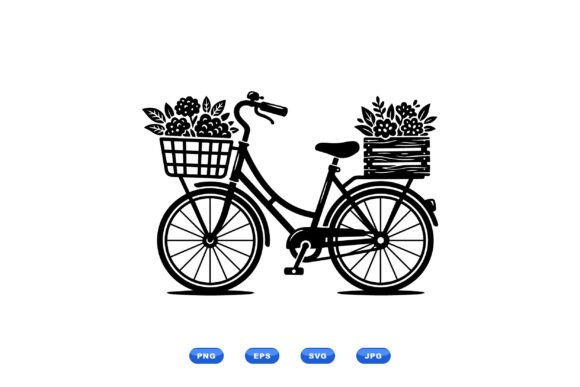
From the moment I opened the file, Vintage Bike Floral Clipart exudes a peaceful, retro vibe. The side view of the bicycle, complete with a front wire basket and rear wooden crate, is rendered in a bold silhouette that feels both modern and classic. The floral elements are subtle but add a softness that balances the strong lines of the bike. It’s a design that feels at home on a tote bag, a sweatshirt, or even a baby onesie.
The layout is simple yet effective. There’s no unnecessary detail—just enough to make the design stand out without overwhelming the fabric. It’s a great choice for those looking for a clean, recognizable image that can be adapted to various projects.
Real-Life Embroidery Use Cases
I imagine using Vintage Bike Floral Clipart on a custom embroidered tote bag for a local boutique. The design would look elegant on a cotton canvas, especially when stitched in a contrasting thread color. It could also work well as a sweatshirt embroidery, adding a touch of personality to casual wear.
For baby items, this design could be used on a onesie or a blanket. The peaceful mood of the clipart makes it ideal for nursery decor or personalized gifts. It’s also a solid choice for holiday embroidery, such as a Christmas-themed apron or a festive pillow cover.
As an Etsy seller, I’d consider using this design for printable mockups or digital product previews. Its simplicity allows for easy adaptation to different backgrounds and color schemes, making it versatile for marketing materials.
Where to Be Careful
While Vintage Bike Floral Clipart is a strong design, there are some limitations to keep in mind. On small hoop sizes, the details might get lost, so it’s best suited for larger embroidery machines. If you’re planning to stitch it on textured fabrics, you may need to adjust your stabilizer and thread tension to ensure clarity.
Thin or stretchy fabrics could pose a challenge, especially if the design has dense stitch areas. I’d recommend testing it on scrap fabric before committing to a client project. Similarly, dark fabrics might require a lighter thread color to maintain visibility.
This design isn’t ideal for curved surfaces like caps or hats, where the shape might distort. If you're planning to use it on a patch or an applique design, make sure the edges are clean and the stitch density is appropriate for the fabric type.
Impact on Visual Appeal and Product Value
Vintage Bike Floral Clipart adds a unique visual element to any project. Its clean lines and nostalgic feel can elevate a handmade product, making it more appealing to customers who appreciate vintage-inspired designs. When used on a custom apparel piece, it can increase the perceived value of the finished product.
For small business owners, this design can help build brand consistency. It’s a great fit for a craft business that focuses on retro or nature-themed items. As a personalized gift, it offers a sense of thoughtfulness that resonates with buyers looking for meaningful, handcrafted items.
When used in commercial embroidery projects, the design maintains a professional look. It’s suitable for both personal and commercial use, provided the licensing terms allow it. Always double-check the license before selling finished items or digital products.
Practical Designer Notes
Before finalizing any project, I always test the design on scrap fabric. This helps identify any issues with stitch density or thread color contrast. For Vintage Bike Floral Clipart, I’d suggest using a running stitch for the outline and a fill stitch for the background to maintain clarity.
It’s also important to review the hoop size needed for the design. If it’s too large for your machine, you may need to split it into sections. Check the design for small details that might not show up well on certain fabrics or in low light.
Testing the design in black and white mockups can help you see how it will look on different backgrounds. Comparing it on light and dark fabrics will give you a better idea of its versatility. Using the right stabilizer is crucial, especially for delicate or stretchy materials.
Finally, make sure the design works for both personal and commercial projects. Confirming the licensing terms ahead of time can save you from potential issues down the line.